

Menu




Medical Care
Lab Testing & Clinical Monitoring in Mukilteo, WA
Comprehensive laboratory and blood testing for women and men, selected according to your symptoms, health history, medications, and treatment goals. I use laboratory results to help evaluate and diagnose medical conditions, identify possible contributors to symptoms, guide treatment decisions, and monitor your health and response to treatment over time.
Laboratory Testing as Part of Personalized Care
Laboratory testing and blood work may be ordered when clinically appropriate as part of an established evaluation, treatment, or monitoring plan. Testing is selected according to your health history, symptoms, medications, and individual treatment goals.
More Than a Blood Draw
Lab results are reviewed and interpreted within the context of your care. They may be used to establish a baseline, evaluate possible contributors to symptoms, monitor treatment safety and response, and guide individualized recommendations or medication adjustments.
A laboratory result is more than a number. The method used to measure that number can affect its accuracy, sensitivity, specificity, and how the result should be interpreted.
How Laboratories Analyze Blood
Clinical laboratories use several different technologies to analyze blood. The method depends on what is being measured and the type of information needed.
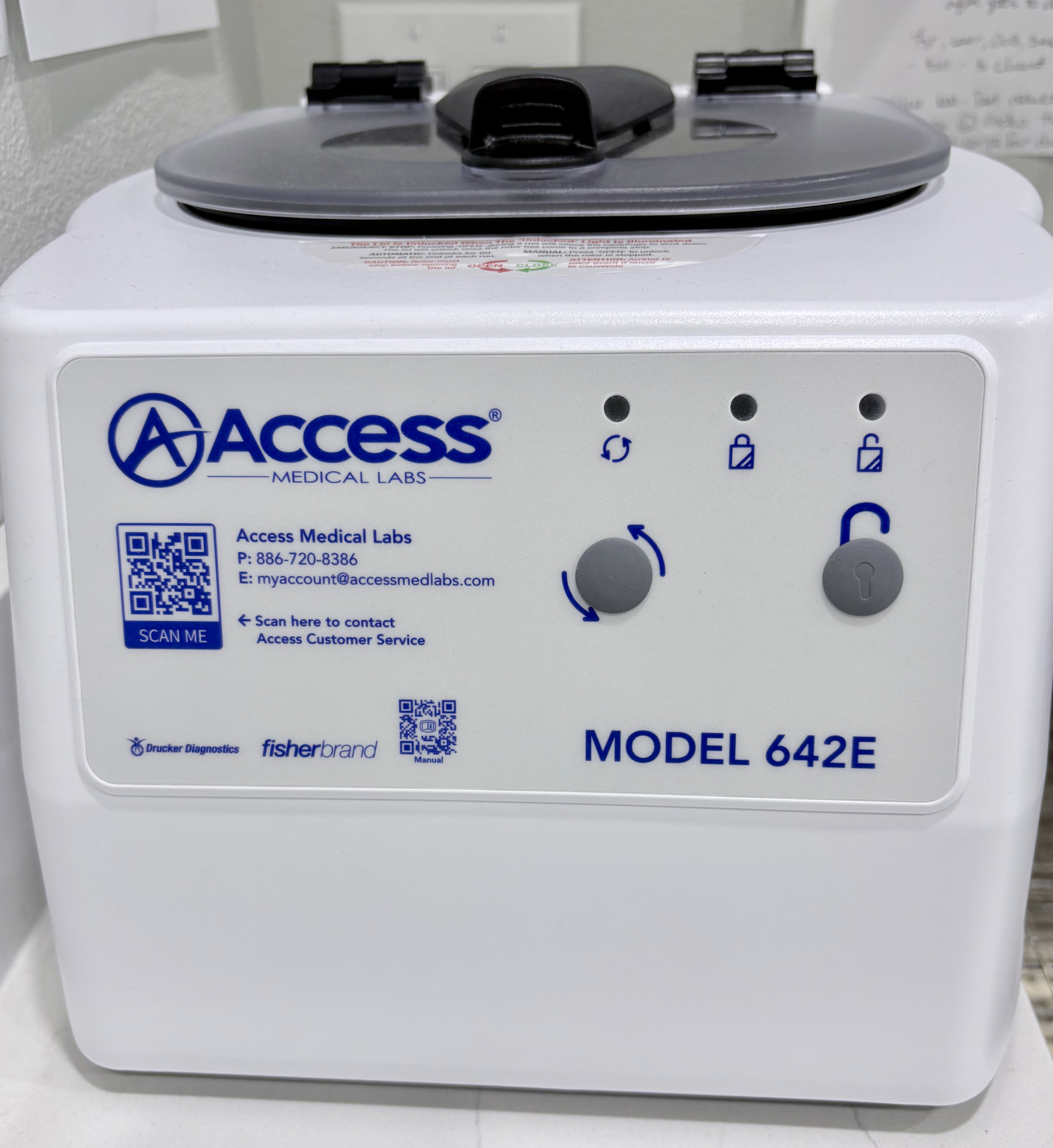
Centrifugation separates blood into its components, such as serum or plasma and blood cells, so the appropriate portion of the sample can be analyzed.
Immunoassays are commonly used to measure hormones, proteins, medications, and other substances. They use antibodies designed to recognize and bind to a particular target. These tests are fast, efficient, highly automated, and well suited for many routine laboratory measurements.
Spectrophotometry measures the amount of light absorbed by a treated sample and can be used to determine the concentration of certain substances in the blood.
Hematology analyzers count and characterize red blood cells, white blood cells, and platelets using technologies such as electrical impedance or laser-based analysis.
Chromatography and mass spectrometry provide additional methods for separating, identifying, and measuring substances within a sample. One important example is liquid chromatography–mass spectrometry, or LC-MS. Some laboratory testing uses tandem mass spectrometry, commonly referred to as LC-MS/MS.
Immunoassay vs. LC-MS/MS
Immunoassays and LC-MS/MS measure substances in different ways, and understanding that difference can sometimes be important when interpreting laboratory results.
An immunoassay relies on biochemical recognition between an antibody and a target molecule. This allows laboratories to process many routine tests quickly and efficiently. However, for certain analytes, immunoassays may have lower analytical specificity, and substances with similar molecular structures can sometimes cross-react or interfere with the measurement. This can be particularly important when measuring structurally similar steroid hormones.¹
LC-MS/MS uses a different analytical approach that can provide high analytical specificity. Liquid chromatography first separates components within the sample, then mass spectrometry identifies and measures molecules based on characteristics including their mass-to-charge ratio. For certain analytes, LC-MS/MS can provide greater analytical specificity and sensitivity and reduce analytical interference compared with immunoassay.¹˒²
LC-MS/MS can be particularly useful for certain small molecules, steroid hormones, medications, and toxicology testing. It can also help distinguish between compounds that may be difficult to differentiate using some immunoassays.¹˒²
Immunoassays are generally faster, highly automated, and widely used for routine clinical testing. LC-MS/MS requires specialized equipment, more complex sample preparation, and experienced laboratory personnel, but it can offer important analytical advantages when greater specificity or sensitivity is needed.
Neither method is automatically the better test for every situation. The appropriate method depends on what is being measured, the concentration expected, the clinical question, and the performance characteristics of the available test.
Why the Testing Method Can Matter
For certain laboratory tests, particularly some hormone, medication, vitamin, and other measurements, small differences in concentration or interference from similar compounds can affect clinical interpretation.
That is why I look beyond whether a result is simply marked “normal,” “high,” or “low.” When the testing methodology is clinically important, I can also consider how the laboratory performed the test, along with the reference range and the clinical circumstances in which the test was ordered.
Laboratory results are interpreted alongside your symptoms, medical history, medications, previous results, and treatment plan. The goal is to understand what the results mean for you, rather than treating an isolated laboratory value as the entire clinical picture.
Comprehensive Blood and Laboratory Testing for Women and Men.
When clinically appropriate, I provide comprehensive laboratory testing for both women and men. Rather than relying on a single laboratory value, I may evaluate multiple markers together to better understand hormone health, thyroid function, nutritional status, metabolic health, medication response, and other factors that may be contributing to your symptoms or affecting your treatment.
Testing is individualized and may include:
Thyroid testing: TSH, free T4, free T3, thyroid peroxidase antibodies (TPO antibodies), and additional thyroid testing when indicated.
Hormone testing: estradiol, sex hormone-binding globulin (SHBG), total testosterone, free testosterone, DHEA, cortisol, and additional hormone testing based on your symptoms, health history, sex, stage of life, and treatment plan.
Vitamin and nutritional testing: vitamin D, selected B vitamins, ferritin, iron studies, and other nutritional markers when clinically appropriate.
Additional testing may be used to evaluate metabolic health, blood counts, kidney and liver function, glucose regulation, cholesterol and cardiovascular risk, medication safety, and other areas relevant to your care.
The specific tests I order are based on what we are evaluating. Comprehensive testing does not mean ordering every available laboratory test for every patient. It means looking broadly enough to identify clinically relevant findings and interpreting those results together rather than treating each value in isolation.
Care Supported by Clinical Monitoring
Testing may support hormone and testosterone therapy, menopause and perimenopause care, medical weight loss, GLP-1 and GIP medication management, thyroid evaluation, adult ADHD care, and other medical services when indicated.
Laboratory testing may be used to establish baseline measurements, investigate possible contributors to symptoms, assess treatment safety, evaluate response to treatment, follow changes over time, and help guide individualized recommendations or medication adjustments.
Laboratory Partners
Hagen Health primarily works with Access Medical Labs. Labcorp or Quest Diagnostics may also be used when appropriate based on the patient’s needs, location, testing requirements, or other clinical considerations.
The laboratory and specific testing method used may vary depending on the test ordered and the clinical circumstances.
Important Information
Laboratory testing is provided as part of an established evaluation, treatment, or monitoring plan. Hagen Health & Absolute Aesthetics does not currently offer standalone or walk-in laboratory testing.
Serving Mukilteo and Surrounding Communities
Personalized medical care and clinical monitoring are available to established patients from Mukilteo, Everett, Lynnwood, communities throughout Snohomish County, and Whidbey Island.
References
- Chai Y, Grebe SKG, Maus A. Improving LC-MS/MS measurements of steroids with differential mobility spectrometry. J Mass Spectrom Adv Clin Lab. 2023;30:30-37. doi:10.1016/j.jmsacl.2023.10.001
- Rodrigo Valero AM, Quintela Jorge O, Bravo Serrano B, Ayuso Tejedor S. Optimization of a rapid method for screening drugs in blood by liquid chromatography tandem mass spectrometry. Adv Lab Med. 2023;4(4):365-371. doi:10.1515/almed-2023-0154
CANDIDACY & SAFETY
When is Laboratory Testing Recommended?
Laboratory testing or blood work may be recommended when the results can help answer a clinical question, evaluate symptoms or health concerns, establish a baseline, guide treatment decisions, or monitor the safety and effectiveness of ongoing care.
Testing may be recommended as part of hormone or testosterone therapy, menopause and perimenopause care, thyroid evaluation, medical weight loss, GLP-1 and GIP medication management, adult ADHD care, nutritional evaluation, medication monitoring, or other medical care when clinically indicated.
The tests you need depend on your symptoms, health history, medications, current treatment, previous laboratory results, and individual goals. Rather than using the same laboratory panel for every patient, I select testing based on what we are evaluating and how the results may affect your care.
Laboratory testing at Hagen Health & Absolute Aesthetics is provided as part of an established evaluation, treatment, or monitoring plan and is not offered as standalone or walk-in blood testing.
Laboratory testing is provided as part of an established evaluation, treatment, or monitoring plan; standalone or walk-in testing is not currently offered. Laboratory results are one part of a clinical evaluation and should not be interpreted in isolation. Results can be affected by factors such as medications, supplements, timing of collection, fasting status, hydration, illness, and the laboratory method used. An abnormal result does not always indicate a medical condition, and a result within the laboratory reference range does not necessarily exclude one. When appropriate, testing may need to be repeated, confirmed with a different method, or evaluated with additional testing. Your results will be interpreted within the context of your symptoms, health history, medications, treatment, and other relevant clinical information. Urgent or potentially serious findings may require additional evaluation or referral for a higher level of care.
A PLAN BUILT AROUND YOUR BIOLOGY
What Is My Approach to Laboratory Testing?
I use laboratory testing as part of a comprehensive clinical evaluation and to establish a diagnosis. I begin by understanding what is concerning you and considering your symptoms, health history, medications, previous treatment, and goals before deciding which tests may provide useful clinical information.
I may not use the same laboratory panel for every patient. I select testing based on the clinical questions we are trying to answer and evaluate results together, considering how they relate to one another and how they may have changed over time.
When interpreting your results, I consider the laboratory reference ranges along with your clinical picture, medications or treatments that may affect the findings, and, when relevant, the testing methodology used. I use that information to help establish or clarify a diagnosis, determine whether additional evaluation is needed, explain what the findings mean for your care, and develop or adjust your treatment plan.
WHAT TO EXPECT
A process built around your safety and progress
01
Clinical Evaluation
We review your symptoms, health history, medications, and treatment goals to determine which tests are clinically relevant.
02
Blood Draw & Laboratory Processing
An authorized staff member can draw your blood at Hagen Health & Absolute Aesthetics, or, for an additional fee, you may have your blood drawn at an off-site laboratory draw center. Your samples are then sent to the appropriate laboratory partner for processing. Depending on the tests ordered and the laboratory performing them, results may take up to 1–2 weeks to process.
03
Results Review & Treatment Planning
Once your results are finalized, Dr. Elizabeth Hagen, ARNP, will review and interpret them within the context of your symptoms, health history, medications, current treatment, and individual goals. You will receive an explanation of clinically relevant findings and recommendations for the next steps in your care.
Depending on your results and the reason for testing, recommendations may include medication initiation or adjustment, procedures, lifestyle and health education, safety monitoring, follow-up laboratory testing, continued clinical monitoring, or referral for coordinated care when appropriate.
TREATMENT GOALS & MONITORING
Your goals, progress, and ongoing care
What Is the Goal of Laboratory Testing?
The goal of laboratory testing is to obtain objective information that helps us better understand your health and make informed decisions about your care. Testing can help identify or rule out possible contributors to your symptoms, clarify findings from your medical evaluation, and determine whether treatment or additional evaluation may be appropriate.
When you are receiving treatment, laboratory testing can also help us determine whether your treatment is working as intended, monitor for potential safety concerns, and identify when adjustments may be needed.
The goal is not simply to bring every laboratory value into a particular range. It is to use the information that is clinically relevant to understand what is happening, explain your options, and develop or adjust a treatment plan that makes sense for you.
How Are Laboratory Results Tracked Over Time?
When ongoing monitoring is appropriate, I compare your current laboratory results with previous results to identify meaningful changes and trends over time. These trends can provide more useful clinical information than looking at a single laboratory value by itself.
Follow-up testing may help assess your response to treatment, monitor medication safety, evaluate whether a dose or treatment plan should be adjusted, and determine whether additional testing or evaluation is needed.
How often testing is repeated depends on what we are monitoring, your medications and treatment plan, your previous results, and your individual clinical needs. As your care progresses, laboratory findings are considered alongside changes in your symptoms, treatment response, and overall health.
AFTERCARE & RECOVERY
After Your Blood Draw
Keep firm pressure on the draw site until bleeding stops and leave the bandage in place for about 30–60 minutes. Drink water, eat normally unless you were given different instructions, and avoid strenuous lifting with that arm for several hours if the area is tender or bruised.
A small bruise can occur and usually resolves on its own. Contact the clinic or seek care if bleeding does not stop with pressure, swelling or pain is increasing, the area becomes red or warm, or you feel persistently faint or unwell after the draw.
BEGIN WITH A CONVERSATION
Need Comprehensive Lab Testing as Part of Your Care?
Schedule an appointment to discuss your symptoms, treatment goals, and whether laboratory evaluation or monitoring is appropriate.
BOOK NOW →PATIENT REVIEWS
What Patients Say About Their Care
“Elizabeth is thorough and she took the time to really understand what I was looking for with regards to my skincare goals.”
L.H. · GOOGLE REVIEW
“Elizabeth is informative, well trained and offers many skin care services. I like her in home facility as it provides a comfortable, relaxing environment.”
A.V. · GOOGLE REVIEW
“From the calming ambiance of the studio to the personalized care and advice, she never tries to upsell any services, and there is never pressure to book the next appointment.”
K.G. · VAGARO REVIEW
LOCAL, PERSONALIZED CARE
Accepting New Patients
Hagen Health & Absolute Aesthetics proudly serves patients from Mukilteo, Everett, Lynnwood, and surrounding areas across Snohomish Countyas well as Whidbey Island, offering a wide range of personalized healthcare services tailored to meet individual needs.
Serving Mukilteo, Everett, Lynnwood, Edmonds, Mill Creek, Whidbey Island & Snohomish County
* All information subject to change. Images may contain models. Individual results are not guaranteed and may vary.