


Choose Hagen Health & Absolute Aesthetics
Because Treating Your Actinic Keratosis Doesn't Have to Leave Scars
Actinic keratoses can be easy to dismiss as another rough or scaly spot that appears with age, but they deserve a closer look. These lesions develop in skin that has accumulated damage from ultraviolet radiation over time and are considered precancerous skin changes because some can progress to squamous cell carcinoma. Most actinic keratoses will not become skin cancer, but there is no reliable way to predict which individual lesion may progress.
Actinic keratoses commonly develop on areas that have received years of sun exposure, including the face, scalp, ears, neck, forearms, and backs of the hands. They may feel rough before they become particularly noticeable and can appear as dry, scaly, crusted, pink, red, tan, or skin-colored areas. Some remain relatively stable, while others may become thicker, tender, irritated, or more noticeable over time.
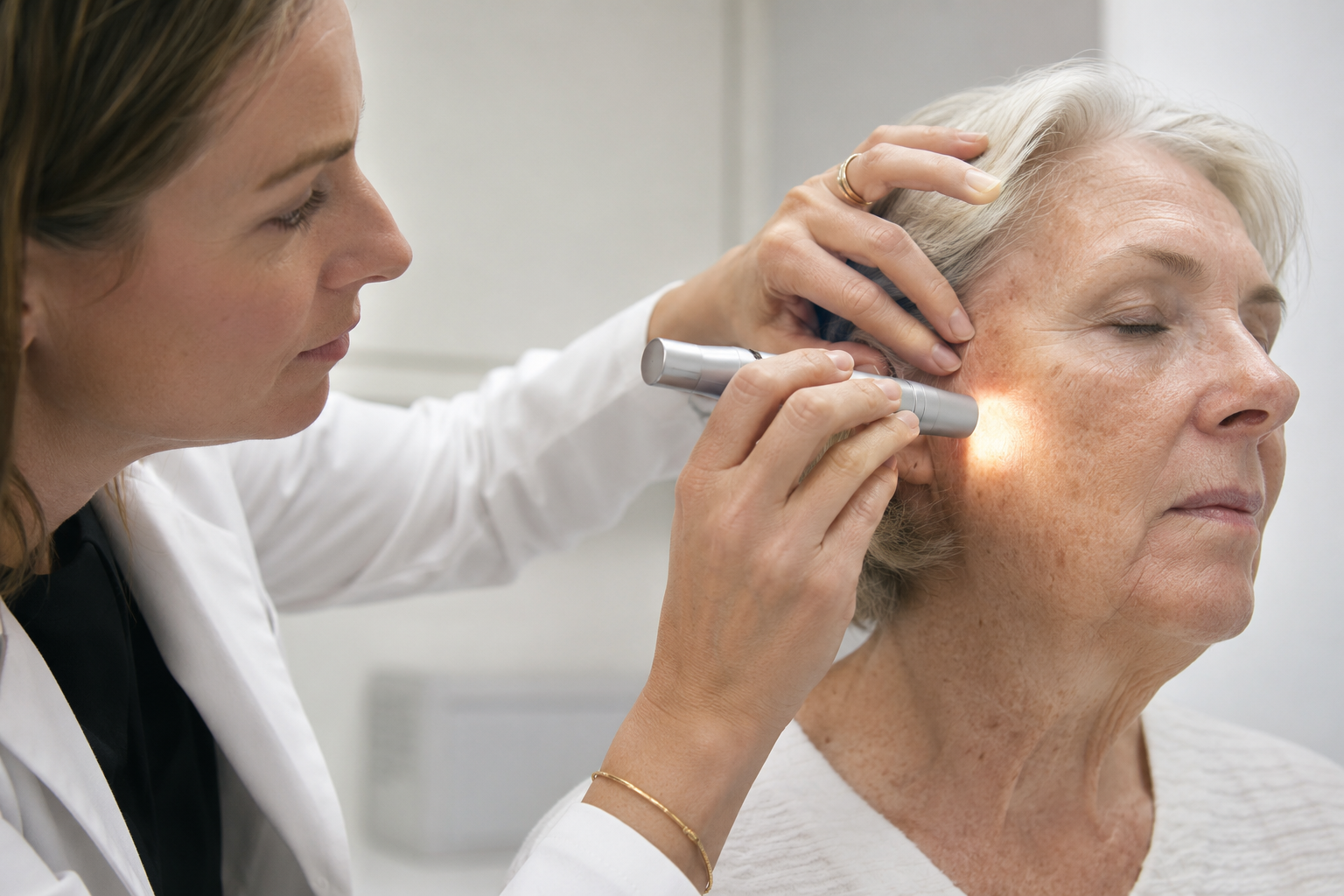
The first step is determining whether a lesion actually appears consistent with an actinic keratosis. Not every rough or changing spot is caused by sun damage, and actinic keratoses can sometimes resemble other benign or potentially concerning skin lesions. I evaluate the appearance, texture, location, history, and surrounding skin rather than simply treating every rough spot the same way. A lesion that is unusually thick, rapidly changing, bleeding, ulcerated, painful, recurrent, or otherwise concerning may require biopsy.
Treatment depends on the individual lesion and the broader pattern of sun damage. Some approaches target a specific actinic keratosis, while others treat a larger area of sun-damaged skin where visible and microscopic changes may coexist. Depending on the clinical situation, treatment options can include cryotherapy, topical medications, curettage or other lesion-directed procedures, and field-directed treatments.
A history of actinic keratoses is also an important reminder that cumulative ultraviolet exposure matters. Consistent sun protection, avoiding tanning beds, monitoring your skin for new or changing lesions, and seeking evaluation when something changes are important components of long-term skin health.
At Hagen Health, the goal is not simply to make a rough spot disappear. It is to identify what the lesion is likely to be, recognize when something needs further investigation, treat appropriate actinic keratoses, and help you protect your skin moving forward.
